Catalytic converter recycling, step by step
In catalytic converter recycling, the platinum, palladium and rhodium of a used catalytic converter are recovered, and the seller is paid for them. On this page we explain how recycling runs, what makes up a batch's value and how to prepare a batch so that you get the best price for it. Download the Recoeye app and see your batch's value before recycling.



Recoeye app cart: 9 catalytic converters with a subtotal of €1,223.85, ready for an offer request.
 Huge Numbers
Recycling starts
with the right data
- 12,500+Catalytic converter models
- 50,000+Photos
- 20Years in the industry
How are used catalytic converters recycled and what do you get for them?
Used catalytic converters are recycled by delivering them to a recycler, who recovers the platinum, palladium and rhodium from the honeycomb and pays for them. The batch's value depends on the models and the day's metal prices, so it pays to check it before requesting an offer. The Recoeye app shows each model's value, and where our trusted partners operate, you can request an offer for the batch in the app.
Recycling pays because one catalytic converter holds only a few grams of precious metal, but these are among the most expensive metals in the world and a refinery recovers almost all of them. Mining the same amount would take tonnes of ore. The metal returns to new catalytic converters and industry without new mining.
The five stages of catalytic converter recycling
Catalytic converter recycling runs in five stages: identification, valuation, collection, processing and refining. The first two happen at the seller's, the rest at the recycler and the refinery.
The catalytic converter model is identified from the code on the shell or from a photo. The model tells how much precious metal the honeycomb holds.
The batch's value is calculated from the models' precious metal content and the day's metal prices.
The batch is collected or delivered to the recycler, who inspects it and confirms the value.
The shell is cut open, the honeycomb is removed and ground to powder. The steel shell goes to scrap steel recycling.
The powder is smelted or dissolved at the refinery, and platinum, palladium and rhodium are separated into pure metals.
What does catalytic converter recycling recover?
Catalytic converter recycling recovers three platinum group metals and the steel of the shell. The precious metals sit in the honeycomb coating; they make up less than one percent of the honeycomb's weight but almost all of the batch's value. That is why a used catalytic converter's price is set by the amount of precious metal and the day's metal prices.
Platinum. In the honeycomb coating, mostly in diesel catalytic converters
Where it goes: New catalytic converters, chemical industry, hydrogen technology
Palladium. In the honeycomb coating, mostly in petrol catalytic converters
Where it goes: New catalytic converters, electronics
Rhodium. In the honeycomb coating in small amounts
Where it goes: New catalytic converters
Iron. Steel shell. Around the honeycomb
Where it goes: Scrap steel recycling
140,000 kg
According to the USGS, about 140,000 kilograms of palladium and platinum were recovered from scrap in 2025.
USGS
1.4 million oz
The World Platinum Investment Council forecasts that autocatalyst recycling will yield about 1.4 million ounces of platinum in 2026, 15 percent more than a year earlier.
World Platinum Investment Council
Recycling is a significant part of the world's supply of these metals. The European Commission classifies platinum group metals as critical raw materials whose recycling the EU wants to increase.
How do you prepare a batch for catalytic converter recycling?
A batch is prepared for catalytic converter recycling with four steps that raise its value and speed up inspection.
Do not open the shell
An intact catalytic converter is identified and priced by model. An opened shell and loose honeycomb are priced per kilo, which is usually worse.
Keep the code visible
Clean the code on the shell with a wire brush. An identified model gets a model-specific price.
Sort the batch
Separate ceramic honeycombs, metal honeycombs and particulate filters, because they are processed differently.
Check the value before an offer
When you know the batch's value in advance, you can compare offers. Once you know the value, you can request an offer for the batch directly in the app.
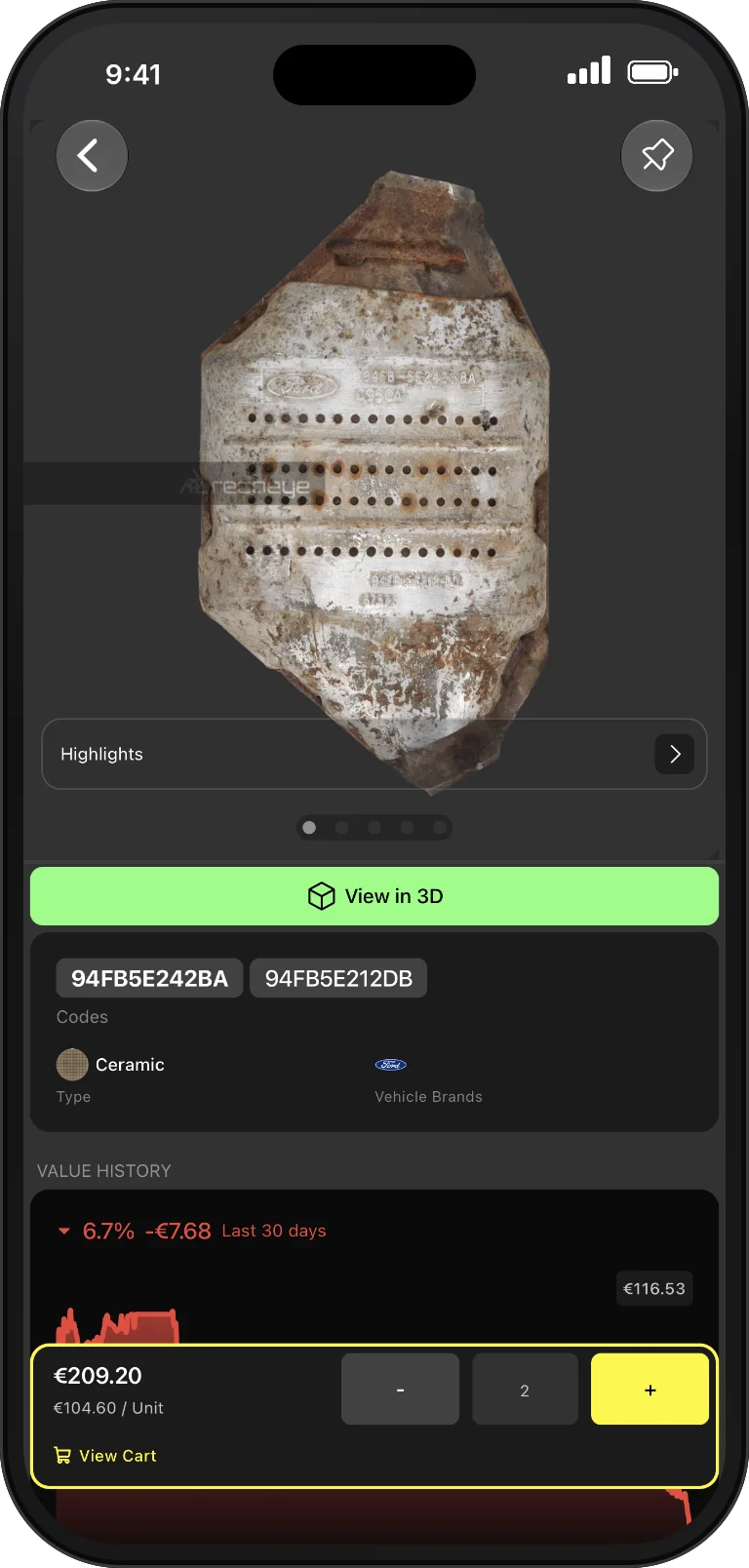
Recoeye app cart: catalytic converter KT6081 at €303.72, two of 94FB5E242BA at €103.68 each and W2A200 at €97.65, with the batch's subtotal and the Get an Offer button.
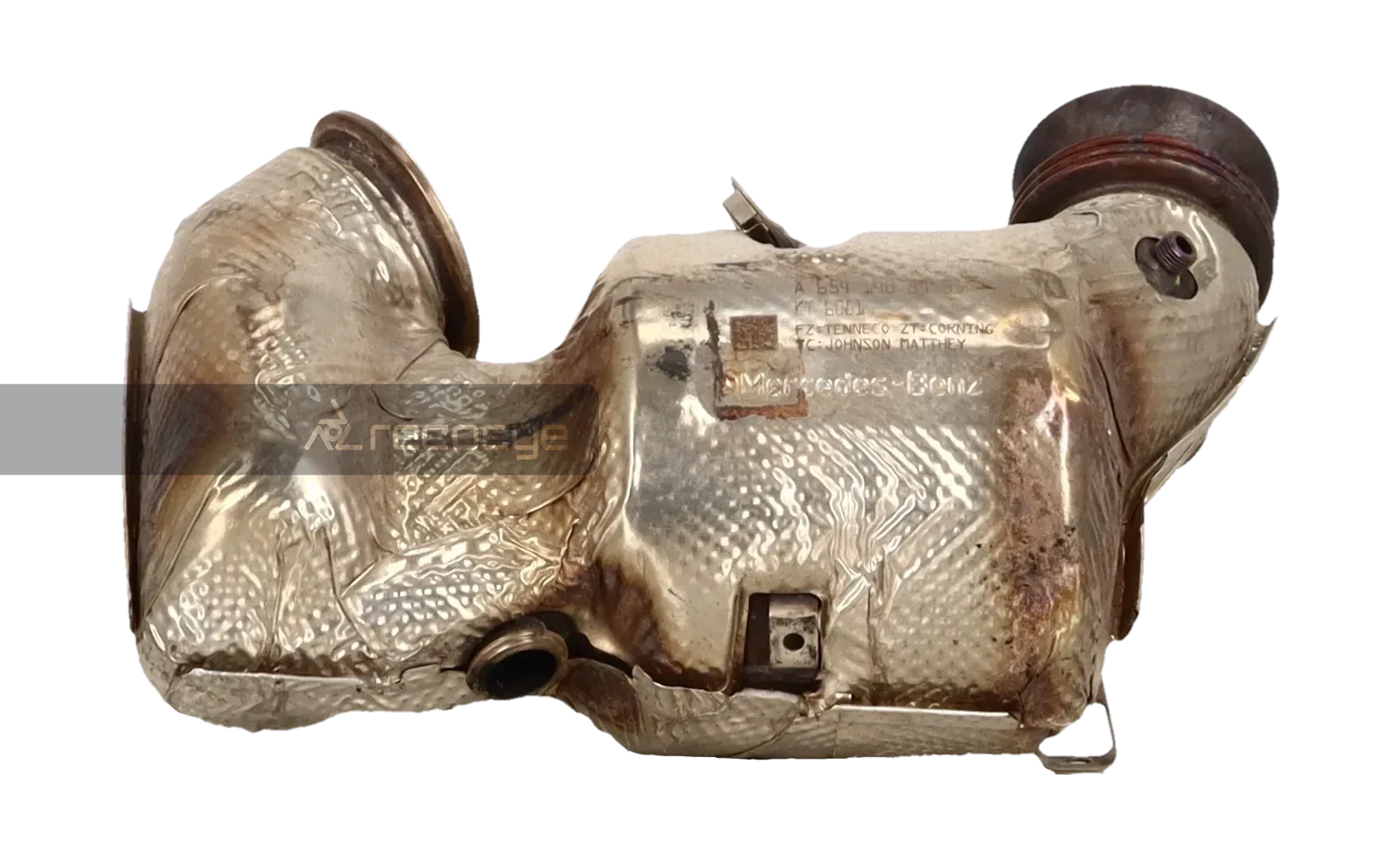
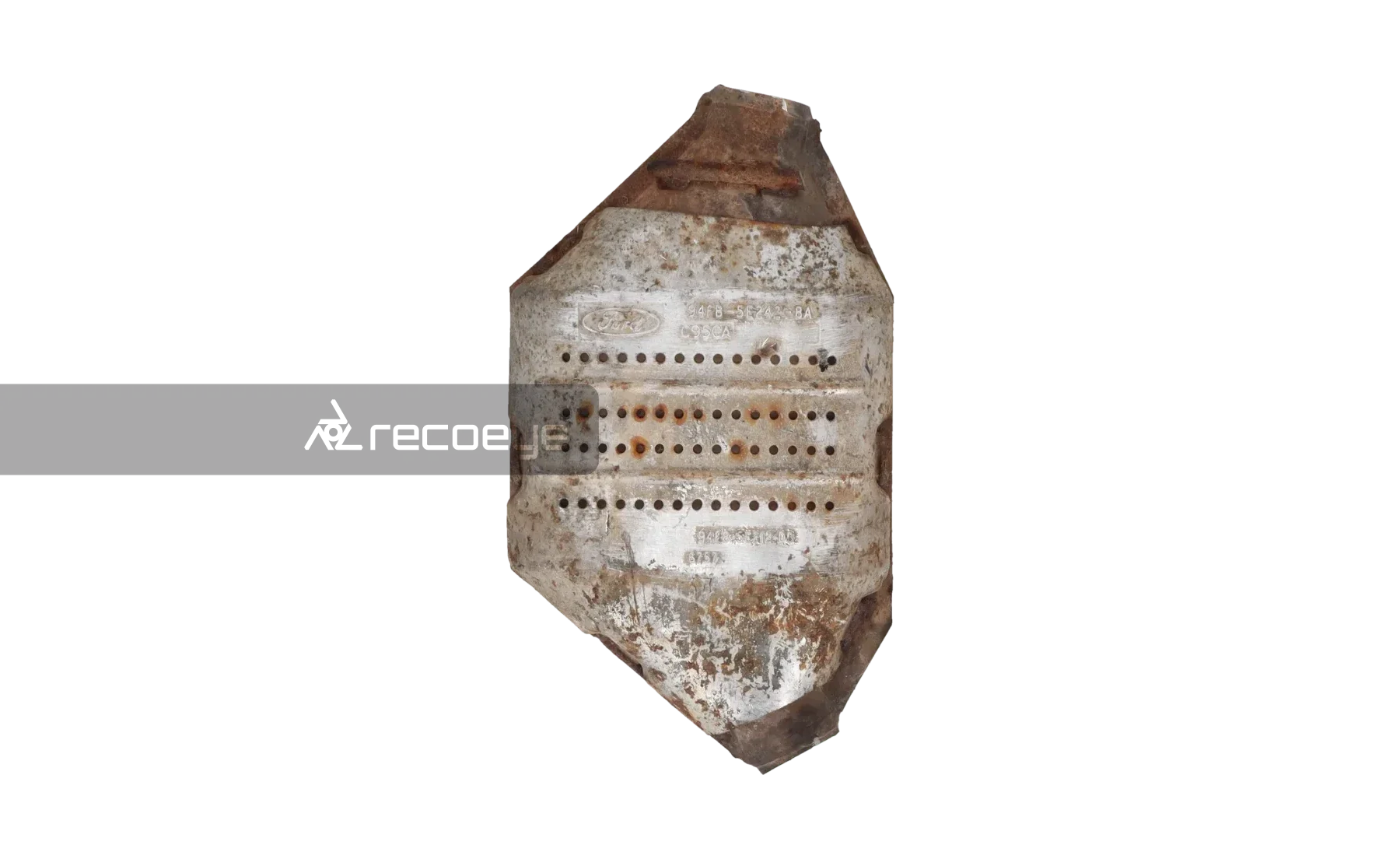
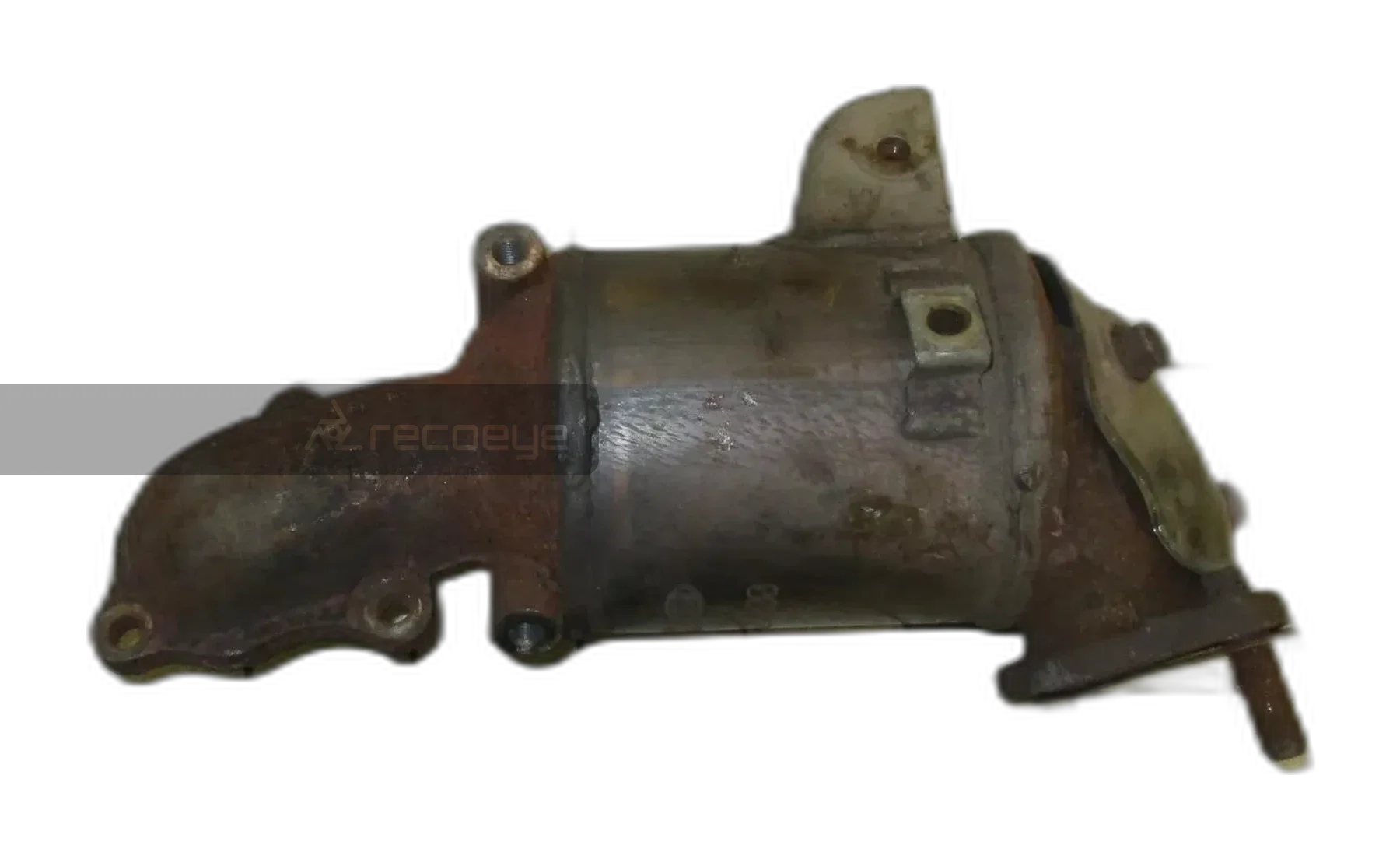
See your batch's value in the app
Add the catalytic converters to the cart in the Recoeye app and see the whole batch's value at today's metal prices before you request an offer.
What rules apply to catalytic converter recycling?
Catalytic converter recycling follows the same rules as other scrap metal handling: the recycler usually needs an environmental permit or registration for waste processing, and the buyer may ask for proof of where the parts came from. In the EU, the End-of-Life Vehicles Directive requires at least 95 percent of a scrapped car's weight to be recovered. The catalytic converter is the most valuable single part of a scrapped car, and it is removed before the car is shredded.
FAQ
Frequently asked questions about catalytic converter recycling
What does catalytic converter recycling mean?
Catalytic converter recycling means that the honeycomb of a used catalytic converter is ground and refined so that its platinum, palladium and rhodium are recovered as pure metals. The steel shell is recycled separately as scrap steel. A refinery recovers almost all of the metal from the honeycomb, and the seller is paid for the batch according to its metal content.
How do ceramic and metal honeycombs differ in recycling?
Ceramic and metal honeycombs differ in recycling by how they are processed. A ceramic honeycomb is ground to powder, from which the precious metals are separated. A metal honeycomb is thin steel foil, and the metals are dissolved or smelted from its coating separately. That is why they are priced and sorted as separate batches.
Should you open a catalytic converter before recycling?
You should not open a catalytic converter before recycling. An intact catalytic converter is identified from its code and priced by model, while loose honeycomb is priced per kilo at an average content. Opening it also crumbles the honeycomb, so part of the metal is lost.
Are aftermarket catalytic converters and particulate filters recycled too?
Aftermarket catalytic converters and particulate filters are recycled too, but their value is lower. An aftermarket part holds only a fraction of an original part's precious metal, and a diesel particulate filter holds little or none. Sort them into their own batch.
What happens to the metals after catalytic converter recycling?
After recycling, platinum, palladium and rhodium are refined into pure metals and sold to industry. Most goes back into new catalytic converters; the rest is used in electronics, the chemical industry and hydrogen technology, among others. The metal is not used up in recycling, so the same platinum can circulate many times.
Why is catalytic converter recycling important for the environment?
Catalytic converter recycling is important for the environment because it replaces mining. Mining platinum group metals takes about a tonne of ore for a few grams, plus a lot of energy and water. A recycled honeycomb holds many times more metal than ore, so the same amount is recovered with a fraction of the emissions.
Do you need a permit for catalytic converter recycling?
Rules depend on the country. In many countries the seller needs no permit, but the recycler usually needs an environmental permit or registration for waste processing. The buyer may ask for proof of where the parts came from, such as a scrapping certificate or company details.
How do you get the best price from catalytic converter recycling?
You get the best price from catalytic converter recycling when the catalytic converters are intact, the codes are visible, the batch is sorted, and the batch's value is known before an offer is requested. The Recoeye app shows each model's value at today's metal prices, so offers can be compared against real value.

Recycle catalytic converters at the right price
The Recoeye app identifies the catalytic converter model and shows the batch's value before you request an offer. Where our trusted partners operate, you can request an offer in the app, and nothing is agreed until you accept it.