What is a catalytic converter and how does it work?
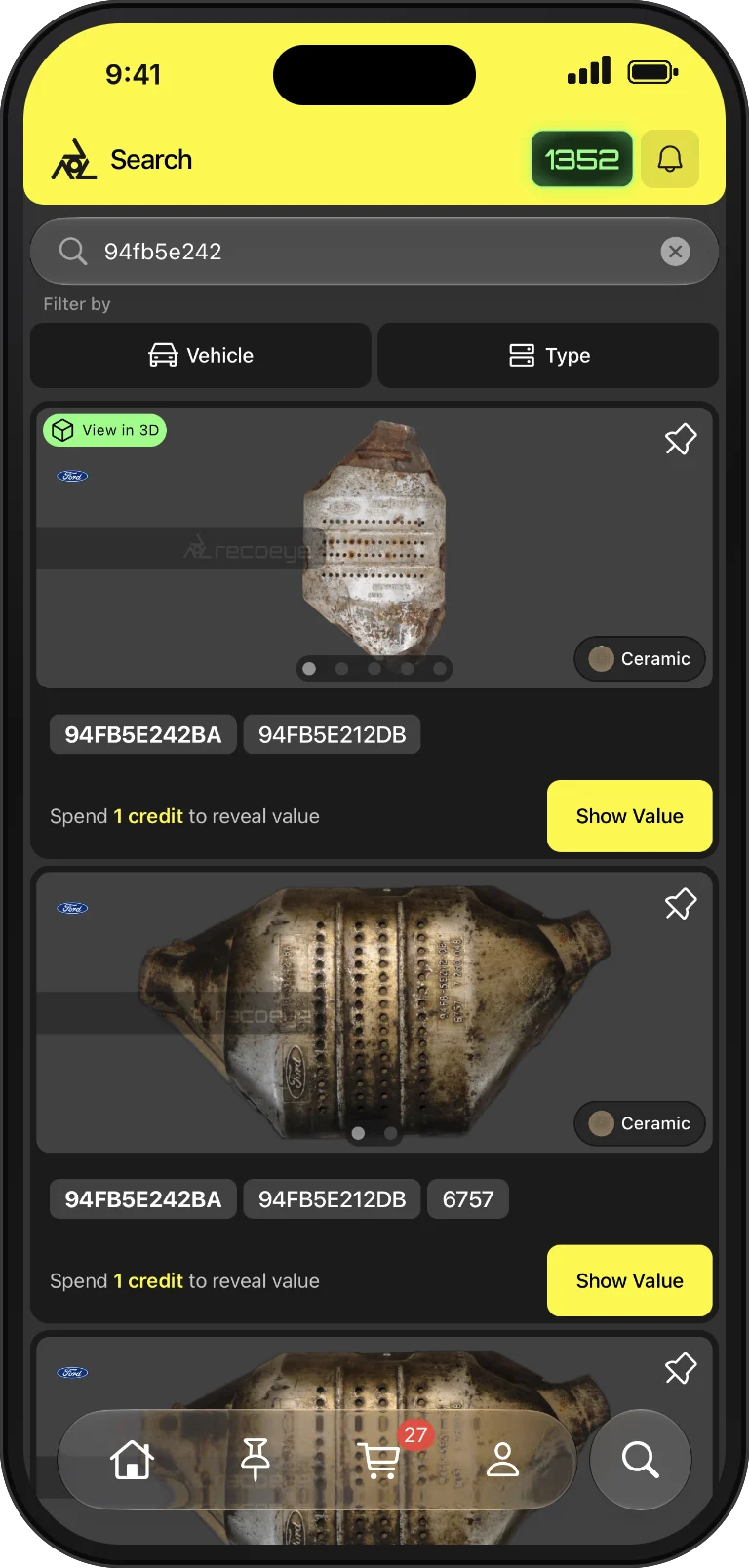
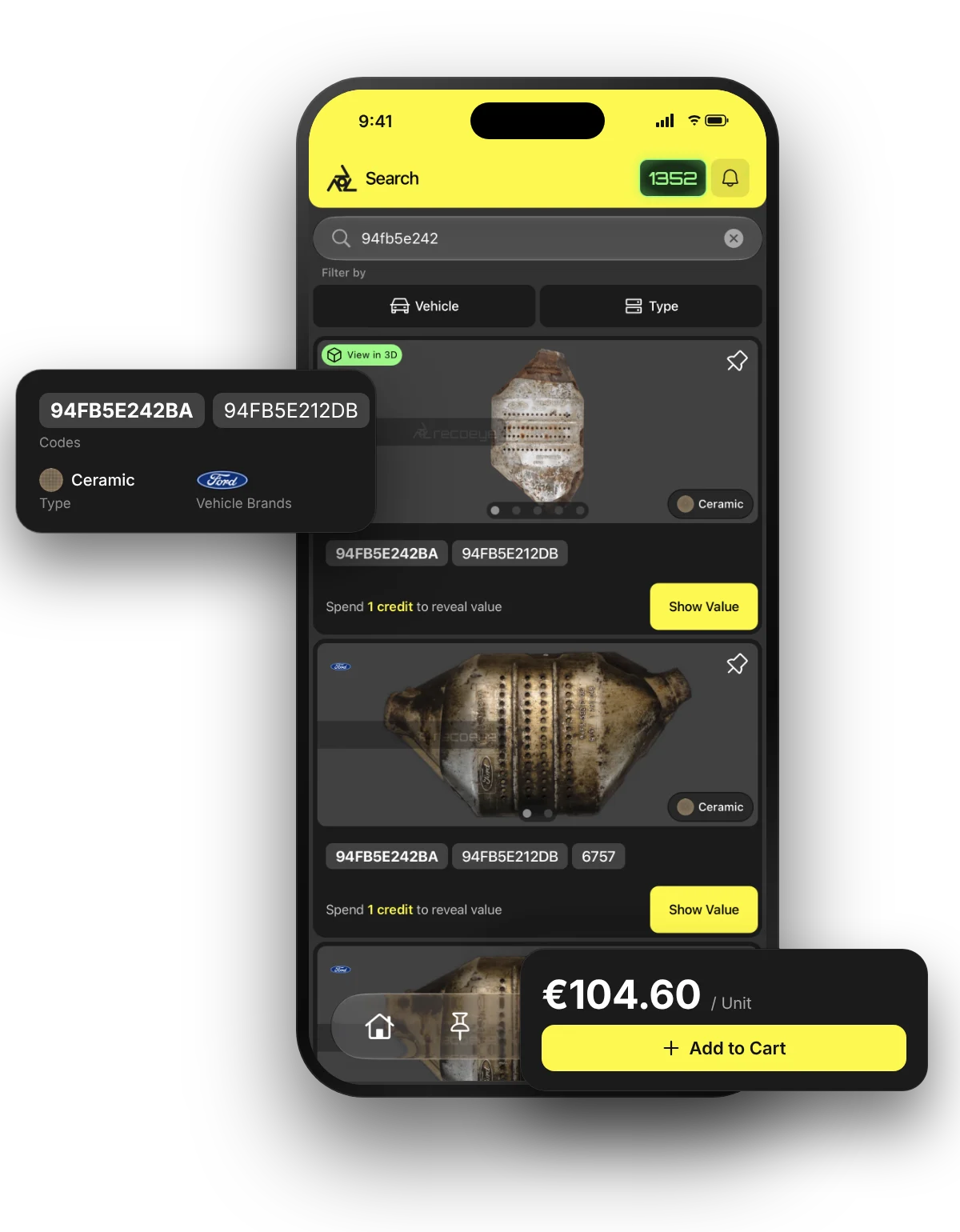
A catalytic converter is a device in a car's exhaust system that turns the harmful substances in exhaust gas into less harmful ones. On this page we explain how the device works, what it is made of, how to identify the model and how to spot a fault. Download the Recoeye app and identify a catalytic converter model by code or photo.



 Huge Numbers
Recycling starts
with the right data
- 12,500+Catalytic converter models
- 50,000+Photos
- 20Years in the industry
What is a catalytic converter?
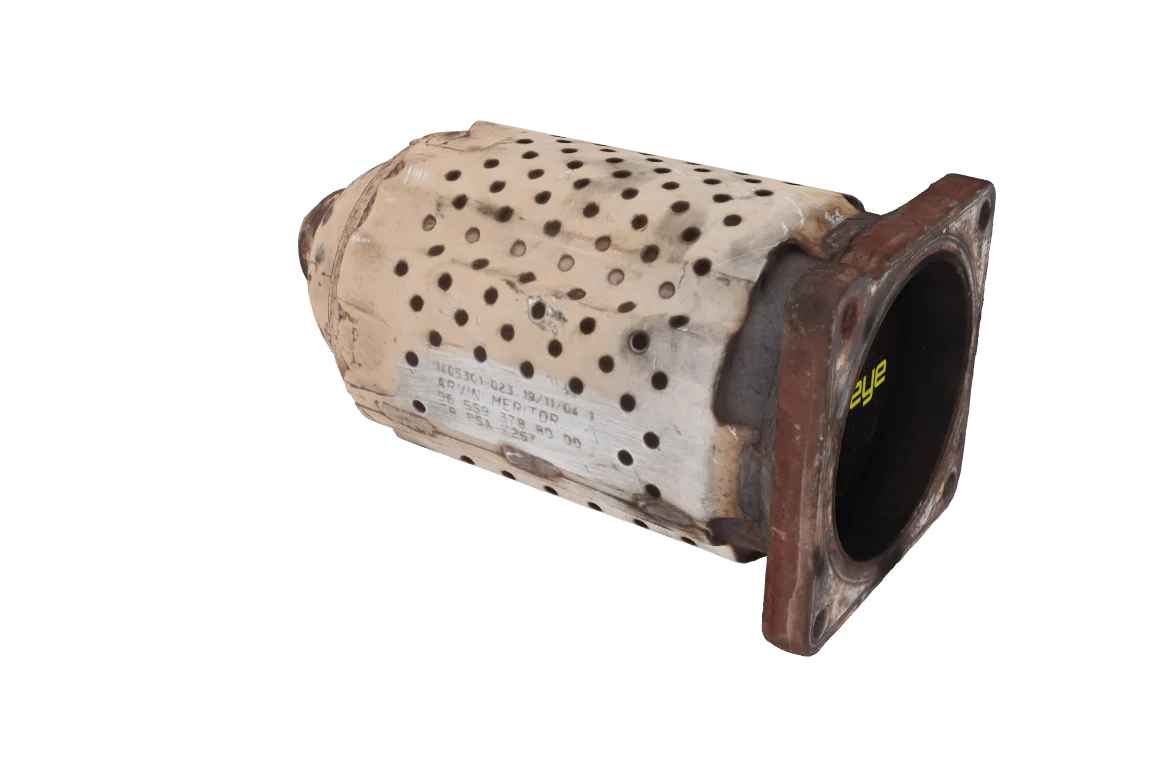
A catalytic converter is an exhaust gas cleaning device fitted in the exhaust system between the engine and the silencer. Inside it is a honeycomb whose surface carries precious metals that start chemical reactions. In these reactions carbon monoxide, unburnt hydrocarbons and nitrogen oxides turn into carbon dioxide, water and nitrogen.
The precious metals themselves are not used up in the reactions. That is where the device gets its name: a catalyst is a substance that speeds up a reaction without being consumed by it.
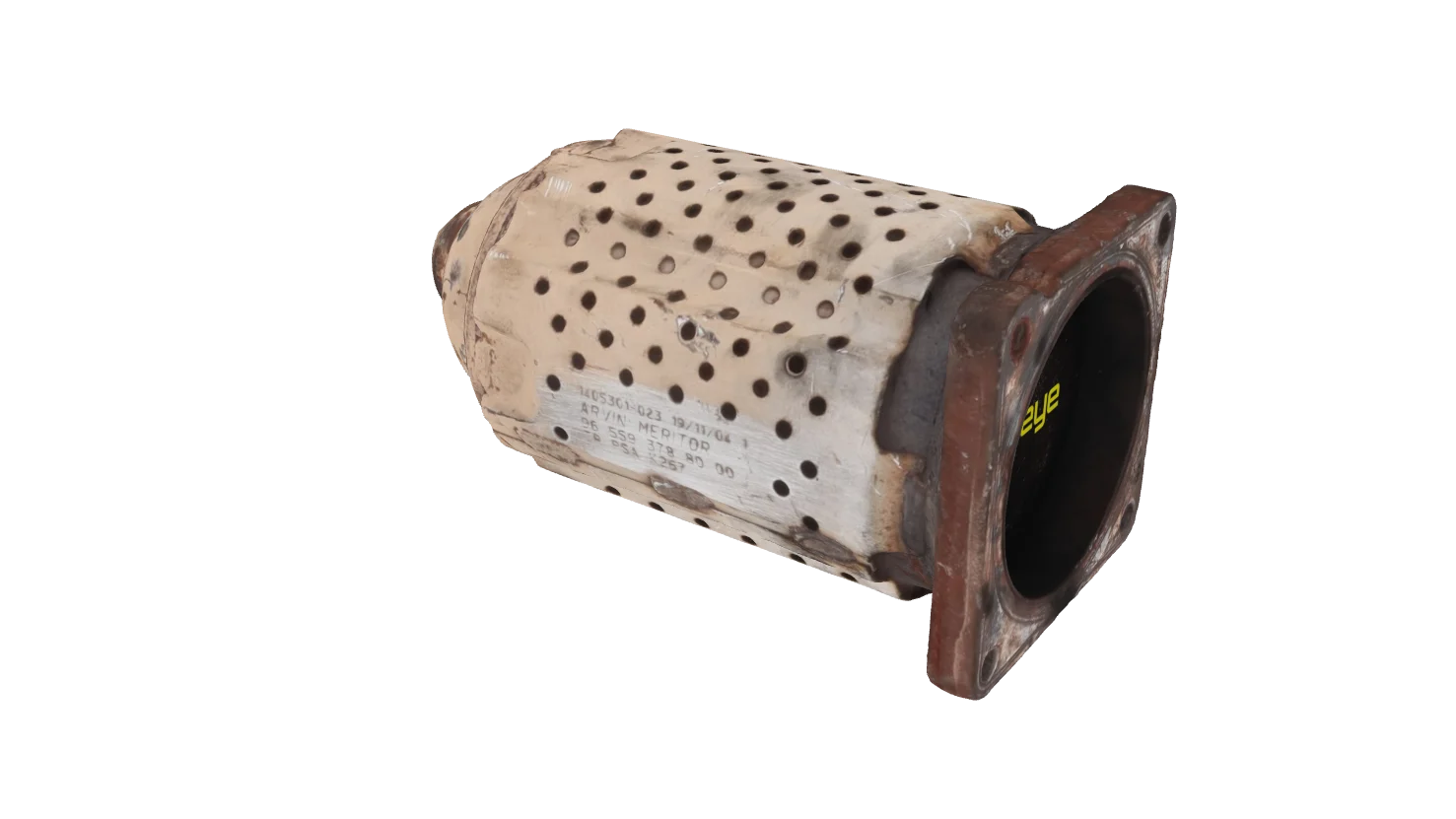
Drag to rotate
How does a catalytic converter work?
A catalytic converter works by letting hot exhaust gas flow through the honeycomb and react with the precious metals on its surface. In a petrol car's device three reactions happen at once, which is why it is called three-way.
| Harmful substance | Turns into | Reaction |
|---|---|---|
| Carbon monoxide (CO) | Carbon dioxide (CO₂) | Oxidation |
| Unburnt hydrocarbons (HC) | Carbon dioxide and water (CO₂ + H₂O) | Oxidation |
| Nitrogen oxides (NOx) | Nitrogen (N₂) | Reduction |
99%+
of the three emissions removed with an accurate air-to-fuel ratio
According to Johnson Matthey, a three-way device can remove over 99 percent of these three emissions when the air-to-fuel ratio is accurately controlled. The ratio is monitored by a lambda sensor, which measures the oxygen content of the exhaust gas.
250–300 °C
honeycomb temperature where cleaning starts
Cleaning only starts once the honeycomb has warmed to about 250–300 degrees. That is why a car's emissions are highest right after a cold start.
What is a catalytic converter made of?
A catalytic converter is made of four parts: the shell, the honeycomb, the coating and the precious metals.
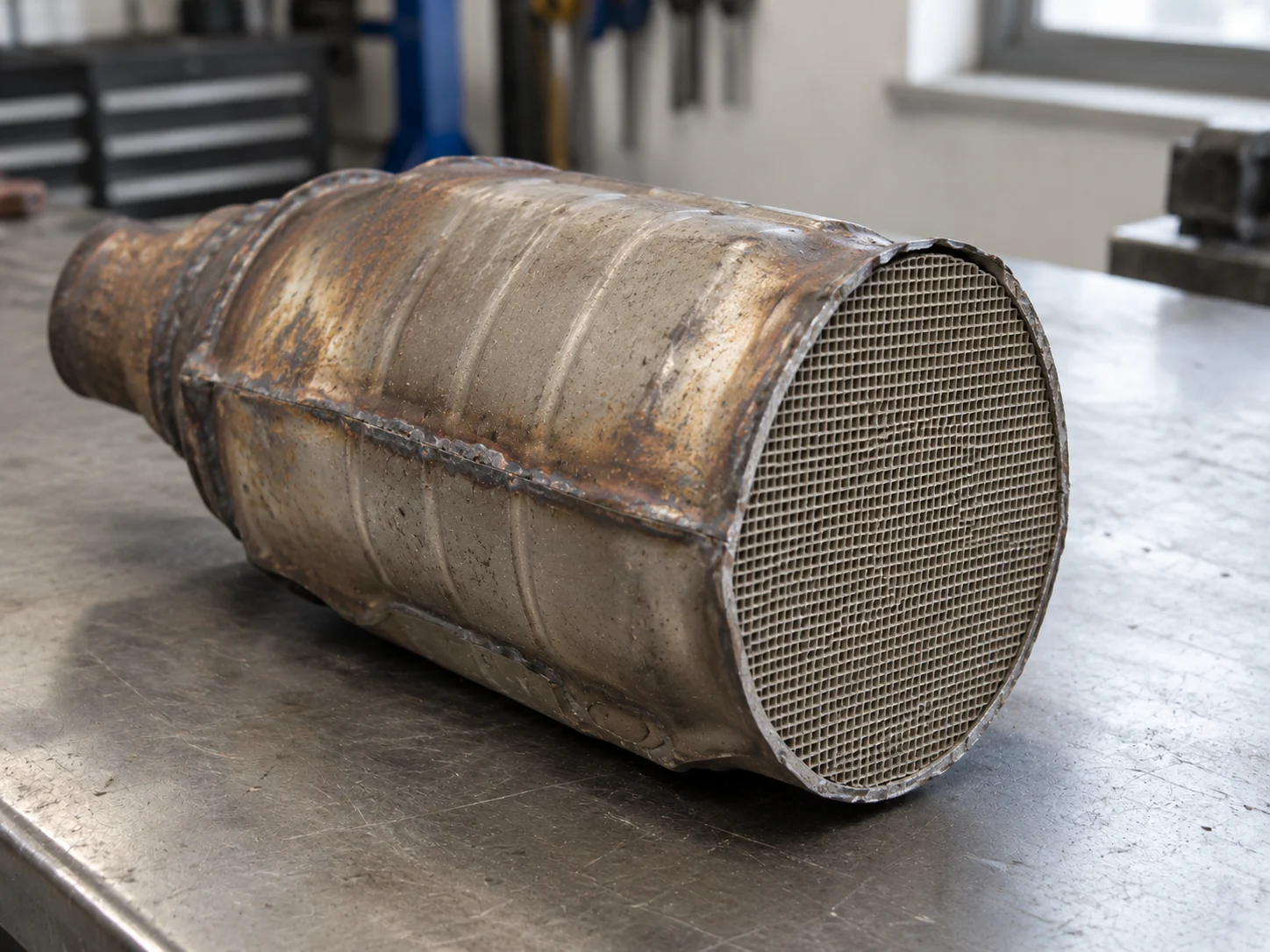
Shell. A stainless steel casing that protects the honeycomb and connects the device to the exhaust system.
Honeycomb. A ceramic or metal body with thousands of thin channels. The channels give the exhaust gas a large contact surface in a small space.
Coating. A porous layer that multiplies the honeycomb's surface area and holds the precious metals in place.
Precious metals. Platinum, palladium and rhodium, which get the reactions going. One device contains only a few grams of them.
Between the honeycomb and the shell there is also an insulating mat that dampens vibration and keeps the heat in the honeycomb.
What types of catalytic converter are there?
There are three common catalytic converter types, and the type depends on the engine.
Petrol cars and hybrids
Three-way catalytic converter
Carbon monoxide, hydrocarbons and nitrogen oxides
Diesel cars
Oxidation catalyst (DOC)
Carbon monoxide and hydrocarbons
Newer diesel cars
SCR catalyst
Nitrogen oxides, using AdBlue fluid
A diesel car usually also has a particulate filter (DPF) that collects soot. It is a separate part, even though it often shares the same shell.
How do you identify a catalytic converter model?
You identify a catalytic converter model from the code stamped on its shell. The code is a series of numbers and letters, often next to the carmaker's logo, and the same code always means the same model. An original part carries the carmaker's logo and part number; an aftermarket part usually carries the manufacturer's own marking.
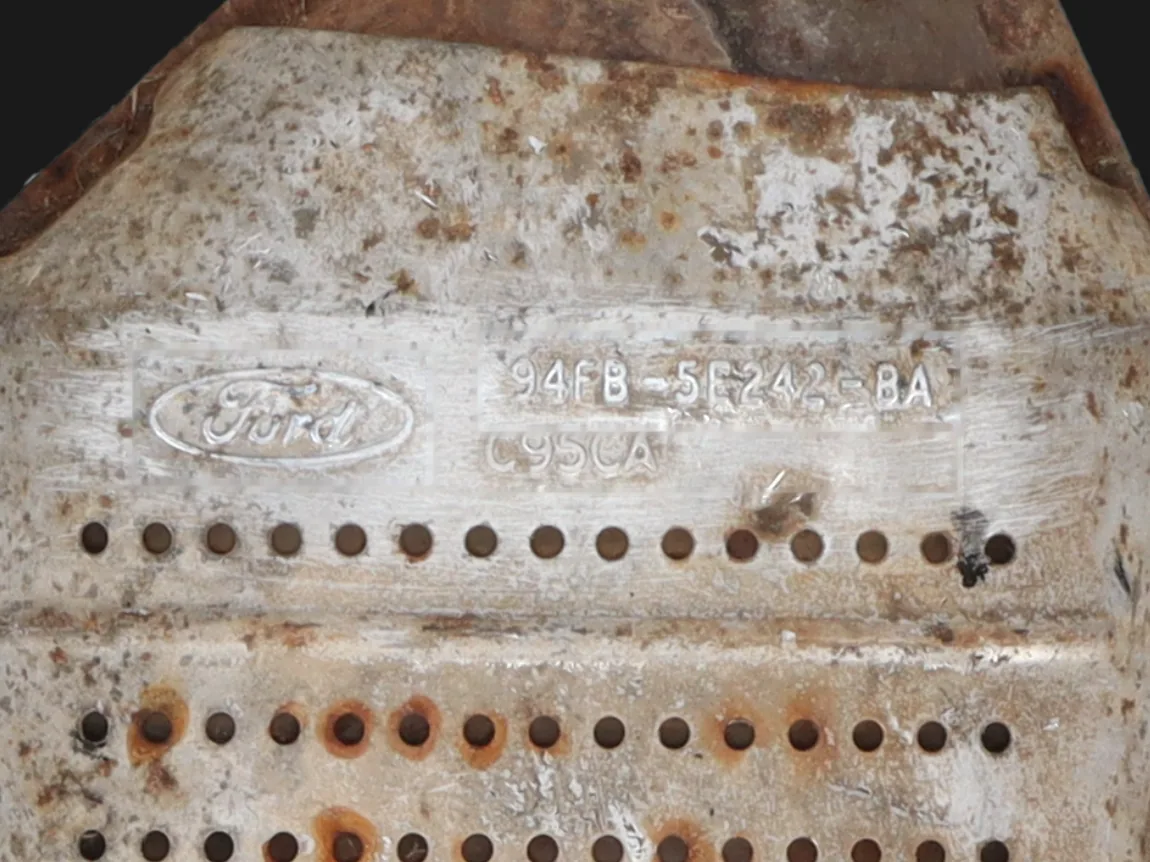
If the code is under rust, clean the shell with a wire brush. If no code is visible, the model can be identified from its shape, size and connections using a photo. It pays to sort batches by model on intake, because ceramic honeycombs, metal honeycombs and particulate filters are processed differently in catalytic converter recycling.
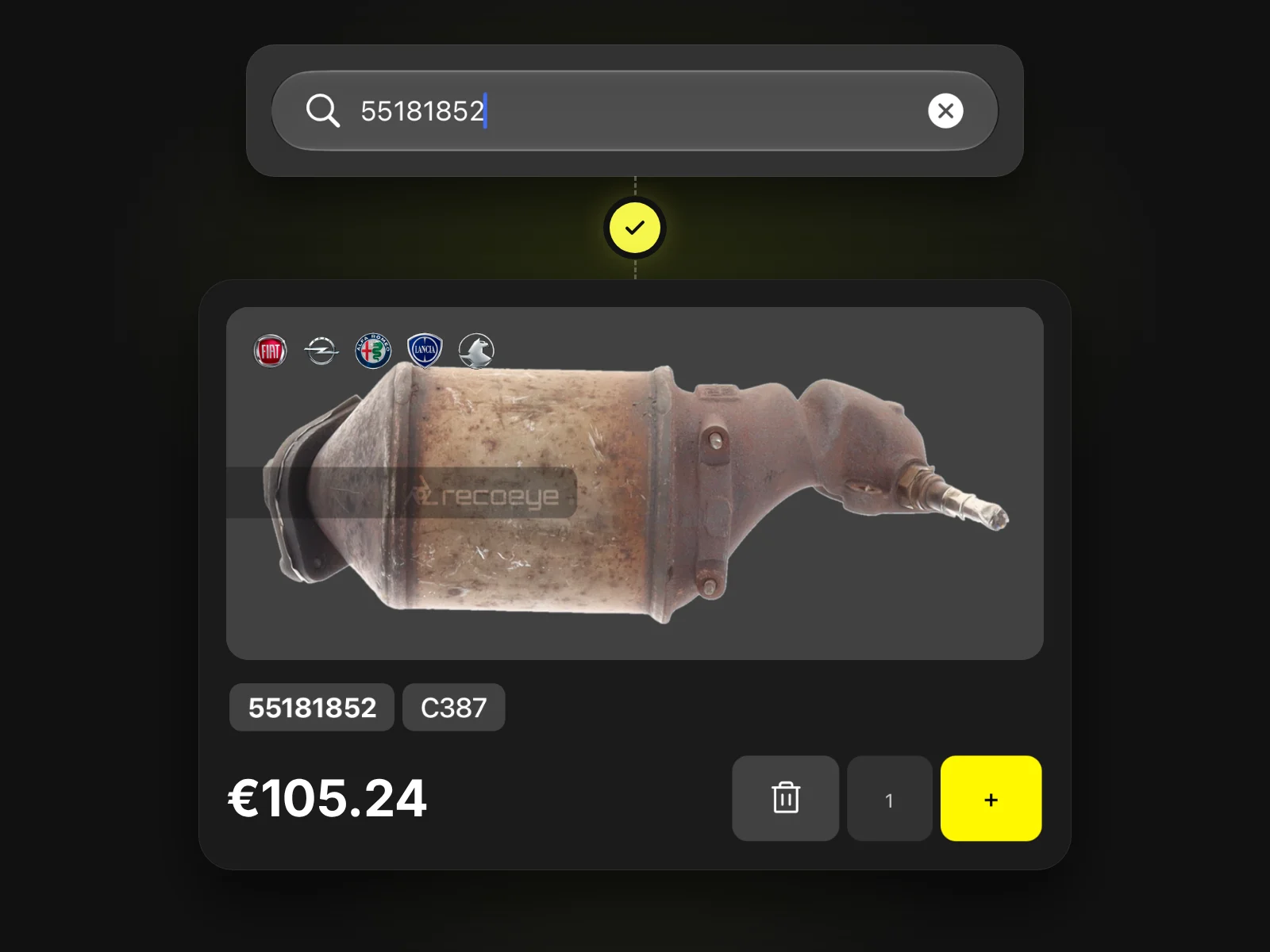
Identify the model in the app: a code or a photo is enough
Enter the code from the shell into the Recoeye app or take a photo, and the app identifies the model from a database of over 12,500 models.
Where is the catalytic converter located?
The catalytic converter is located in the exhaust system between the engine and the silencer. In older cars it sits under the car floor, in newer ones often right after the exhaust manifold in the engine bay. Close to the engine the device warms up faster and starts cleaning sooner. Many cars have two of them.
Under the floor
Older cars
Right after the manifold
Newer cars
Two catalytic converters
Many cars
How do you recognise a faulty catalytic converter?
In a workshop you can usually recognise a faulty catalytic converter by six symptoms:
Warning light
The engine warning light comes on, and the fault memory often holds code P0420.
Weak acceleration
The car accelerates more weakly, because a clogged honeycomb restricts exhaust flow.
Rotten egg smell
The exhaust smells of rotten eggs.
Rattle underneath
A rattle comes from under the car when a broken honeycomb moves inside the shell.
Higher fuel use
Fuel consumption goes up.
Failed emissions test
The emissions test fails at the periodic inspection.
What breaks a catalytic converter?
A catalytic converter is most often broken by an engine fault, not by age.

Misfires
With misfires, unburnt fuel ignites in the honeycomb and melts it.

Oil or coolant
Oil or coolant burnt by the engine clogs the coating.

Hard knock
A hard knock to the underside can crack a ceramic honeycomb.
How long does a catalytic converter last?
150,000+ km
A catalytic converter is designed to last the whole life of the car, and with a healthy engine it often lasts well over 150,000 kilometres. Its life is shortened by untreated ignition faults, an engine that burns oil and constant short trips where the device never warms up.
Is a catalytic converter mandatory?
1992 Euro 1
A catalytic converter is in practice mandatory in all combustion-engine cars made after the early 1990s. The EU's first emission standard, Euro 1, came into force in 1992, and a petrol car cannot meet it without this device.
FAQ
Frequently asked questions about the catalytic converter
What does a catalytic converter do?
A catalytic converter's job is to clean the engine's exhaust gas before it reaches the open air. The device turns carbon monoxide, unburnt hydrocarbons and nitrogen oxides into carbon dioxide, water and nitrogen. The reactions take place on the honeycomb surface with the help of platinum, palladium and rhodium.
How do you tell an original catalytic converter from an aftermarket one?
You tell an original catalytic converter from an aftermarket one by the markings on the shell. An original part carries the carmaker's logo and part number; an aftermarket part carries the manufacturer's own marking and often a simpler, lighter shell. The difference matters, because an original part contains considerably more precious metal.
At what temperature does a catalytic converter work?
A catalytic converter starts working when the honeycomb warms to about 250–300 degrees, and in normal driving its temperature is 400–800 degrees. When cold, the device does not clean the exhaust gas. That is why emissions are higher on short trips than on a long motorway drive.
Does a diesel car have a catalytic converter?
A diesel car has a catalytic converter, but of a different type than a petrol car. A diesel has an oxidation catalyst that removes carbon monoxide and hydrocarbons. Newer diesel cars also have an SCR device for nitrogen oxides and a particulate filter for soot.
Does an electric car have a catalytic converter?
A fully electric car has no catalytic converter, because it has no combustion engine and no exhaust gas. A hybrid or plug-in hybrid does have one, because it has a petrol or diesel engine alongside the electric motor.
Can a catalytic converter be cleaned?
A catalytic converter can be cleaned only if it is lightly carboned up. A long motorway drive raises the temperature and burns the deposits off. A melted or broken honeycomb cannot be repaired, and then the device has to be replaced.
What does fault code P0420 mean?
Fault code P0420 means that the catalytic converter's cleaning efficiency has dropped below the engine control unit's threshold. The cause is most often a worn or damaged honeycomb. The same code can also be caused by a faulty lambda sensor or an exhaust leak, so check those first.
Why are there precious metals in a catalytic converter?
A catalytic converter contains precious metals because platinum, palladium and rhodium speed up the exhaust cleaning reactions without being used up themselves. They withstand the heat of the exhaust gas and work for years. One device contains only a few grams of them.

Identify a catalytic converter with the Recoeye app
The Recoeye app identifies a catalytic converter model from the code or a photo, from a database of over 12,500 models, and shows its real value at today's metal prices. The value is calculated from the same factors that make up a used catalytic converter's price.